What Is Clipping? How It Works and Who Pays
Clipping turns long videos into short social posts. Learn who pays clippers, how rates and caps work, and whether paid clipping fits your brand.
By Jacob Georgas · October 29, 2026
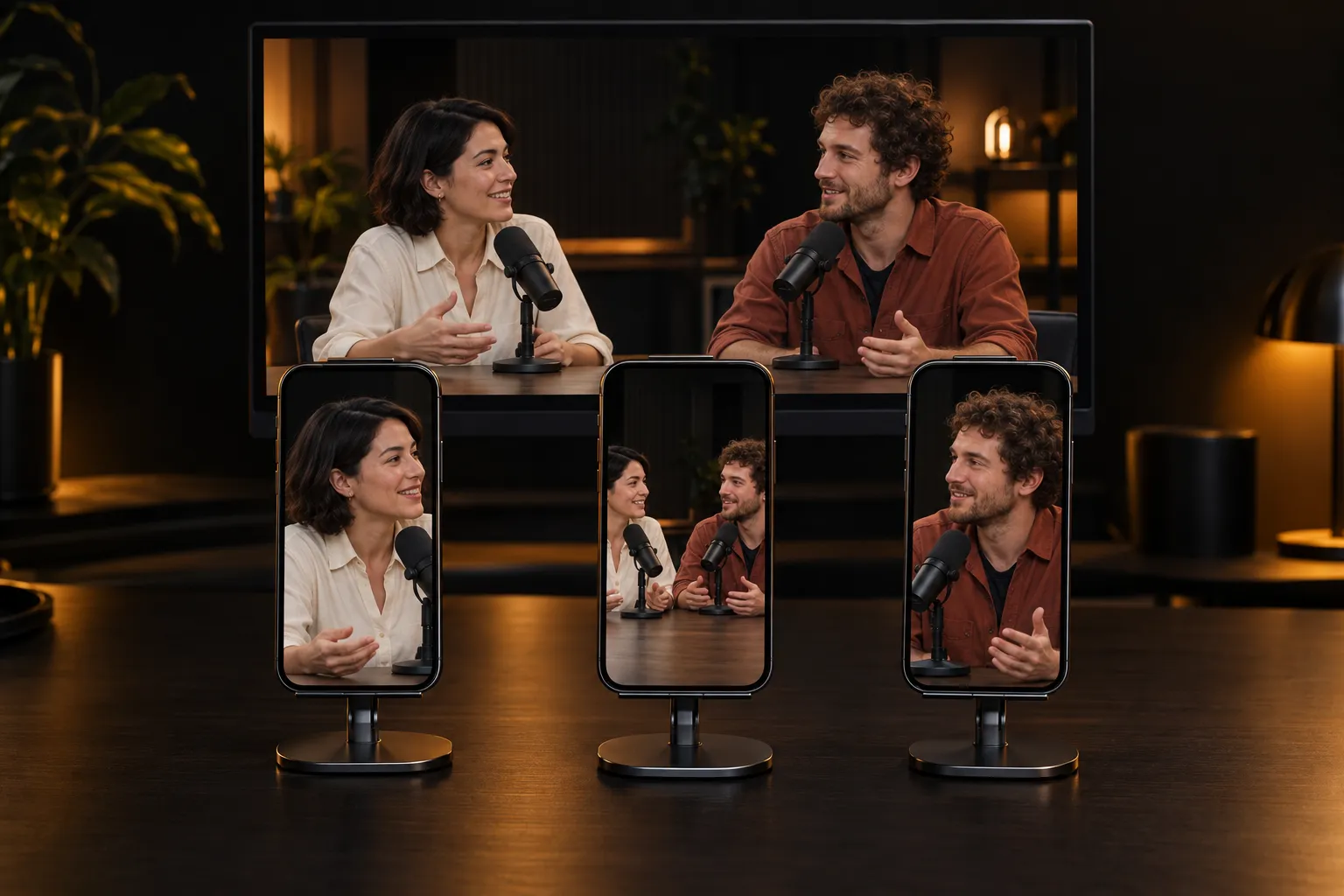
Clipping is taking moments from longer videos and editing them into short clips for TikTok, Instagram Reels and YouTube Shorts. In paid clipping campaigns, people called clippers also publish those clips, often earning money from the creator or brand for qualifying views.
What is clipping in social media?
A podcast highlight on the host's account, an unpaid fan's stream edit and a paid clipper's post can all be clipping. The paid campaign adds an agreement about distribution and compensation. Here, we're discussing social video, rather than audio distortion or shortened words in linguistics.
For a team considering clipping marketing, the first question is what you need: edited files, people to publish them, or both.
How does clipping work, and who pays the clipper?
The content starts with a recording: a podcast, livestream, interview, product demo or other brand footage. A clipper selects a moment with a clear opening hook and enough context to make sense on its own, trims it, adds captions and reframes it for a vertical screen.
For example, a podcaster could turn a guest's surprising answer into a standalone Reel. An app team could extract a useful demonstration from a longer founder recording.
The finished video goes on an agreed account. That might belong to the brand or to the clipper. In a paid distribution campaign, the published link becomes a submission: a post the campaign can review, track and price under the agreed rules.
The money comes from the buyer's budget:
| Arrangement | Who pays whom? | What the payment buys |
|---|---|---|
| Direct creator agreement | Brand or creator (the footage owner) → clipper | Editing, posting or eligible views, as agreed |
| Managed agency or network | Buyer → provider; creator payments follow the provider's arrangement | The contracted production, distribution and management scope |
| Tracking software for your own roster | Buyer → software company, separately from creator pay | Records and calculations for work your team runs |
A brand's clipping offer is paid from the brand's budget, not by the app the clip is posted on. A streaming platform can also be a payer: in April 2026, Business Insider reported that of streamer N3on's network of around 1,000 clippers, about half belong to a group he built with fellow streamer Adin Ross and the rest are paid by Kick.
How are clippers paid?
Pay per view, or CPM: the deal states an amount per 1,000 qualifying views. CPM means cost per thousand; in a clipping offer, it describes the creator's view rate. A cap can limit each post's earnings.
Flat fee: payment covers an agreed edit, qualifying post or campaign deliverable. Confirm whether the fee includes publishing, since delivering a video file and posting it are separate jobs.
Base plus performance bonus: a qualifying post earns a base amount, with additional pay tied to views or milestones. The base can still have conditions; it need not be guaranteed income.
Commission or affiliate pay: an affiliate arrangement can reward attributed sales instead of views. SideShift's clipping explainer (29 October 2025) describes payment per clip, per campaign or through a hybrid commission tied to performance, and lists affiliate deals as another way clippers earn. Agree on the percentage, qualifying sales and attribution method before work starts.
If you're looking for clipping work, read the actual offer before editing. Find out who owes the payment, what can disqualify a post and when payment happens. A high view count alone is not an earnings promise.
Does every view earn money?
No. The offer determines which views count and whether the post qualifies. These terms explain the difference between a public view counter and a payable amount:
| Term | Plain meaning |
|---|---|
| Counting window | The period used to measure a post's payable performance |
| Minimum views | The reach a post must achieve to qualify under the deal |
| Cap | The maximum payable views or earnings for a post |
| Finalized amount | The calculated earnings after counting closes; not necessarily money already sent |
Illustration: a clip with 1.2 million views
Take the example in the rate and cap documentation: a rate of $0.50 per 1,000 views, a 500,000-view cap, and 1,200,000 finalized views. Assume the post meets the minimum and content requirements and passes review.
Payable views = the lower of 1,200,000 and 500,000
Amount owed = 500,000 ÷ 1,000 × $0.50 = $250
Ignoring the cap would produce $600. The agreed obligation is $250.
In ViewsBase, the counting window decides when that calculation becomes final, and the minimum decides whether the post qualifies at all. After the window ends, a successful closing fetch fixes the views and amount. If the post needs review, it remains outside ready-to-pay totals until resolved. Keep its link, saved deal, final count and decision together so both sides can understand the amount.
Who uses clipping, and why?
Streamers and video creators have recordings containing moments that people missed live. Clips give those moments a separate chance to find an audience.
Podcasters can introduce a guest, argument or story before asking someone to watch a full episode. The clip needs its own payoff; it should be useful even to someone who never clicks through.
Brands and app teams can distribute demonstrations, founder interviews and approved product footage. The commercial question is whether those viewers become interested prospects, visitors or users.
Agencies can coordinate this work for clients, assigning editing, posting and review to different people.
The appeal is getting more opportunities from footage you already have and testing different openings and angles. Large programs have also made clipping newsworthy: on 26 April 2026, Business Insider reported that streamer N3on spent over $1.4 million on 303 clippers over five weeks, citing a document his team supplied. The same report says he pays $40 per 100,000 views ($0.40 per 1,000), or $50 per 100,000 when he wants to push clippers harder, which the report puts at the higher end of the market for a big Kick streamer. That illustrates one program's scale, not typical earnings or a market average.
Is clipping the same as UGC or influencer marketing?
The difference is the source material and the deliverable; pay can be agreed either way.
| Approach | What you start with | What you buy and where it goes |
|---|---|---|
| Clipping campaign | Existing footage | Short edits and distribution on agreed brand or clipper accounts |
| Original UGC | A product and creative brief | Newly filmed content for your channels, ads or creator posts, depending on the agreement |
| Influencer partnership | A creator and their audience | Content and placement on that creator's account |
| Editing or repurposing service | Existing content | Finished assets that your team arranges to publish |
A creator filming a new app testimonial can earn per view without making that testimonial a clip.
Use the deliverable to choose the service, then compare how clipping, UGC and influencer deals differ on price and volume. Our comparison of agencies, marketplaces and your own roster explains who takes on the remaining work.
What do real pay-per-view results look like?
Our own app's campaigns show how payment mechanics work across ordinary posts and viral hits. We pulled the data on 17 October 2026: 391 creators contributed 12,120 posts to 7 DePuff AI campaigns between 2 July 2025 and 2 October 2026. TikTok accounted for 96.7% of the posts.
These were mostly slideshow and talking-head UGC posts, rather than edits of long videos. They share the pay-per-view model, but this is one advertiser, not a market census or a forecast for clipping. The full study and methodology explain the sample.
| Finding | What it tells a buyer |
|---|---|
| Median across all scoped posts: 5,111 views | Assess ordinary posts alongside the largest hits |
| 39.9% of all scoped posts rejected | Submission volume and earning-post volume differ |
| Top 10% of earning posts accounted for 68.4% of earnings | A small share of successful posts can dominate the obligation |
| $0.246 per 1,000 recorded views on earning posts | Observed creator cost is different from the stated rate |
“Earning posts” means paid or finalized posts with positive earnings; some finalized amounts had not yet been transferred. Rejection is not a fraud measure, and missing reasons prevent a complete explanation of the rejected group.
The cost calculation uses $339,331.88 in earnings ÷ 1,377,396,331 recorded views × 1,000, across 7,079 earning posts. Rejected posts are excluded from both totals; views beyond caps remain included. Software, payment fees and labor are excluded.
The median positive rate was $0.40 per 1,000 views. That median weights each rated post equally; the pooled cost weights views. Caps also stop earnings while views can keep growing. The $0.246 figure is creator cost only, not an acquisition cost.
What can go wrong with paid clipping?
Inflated views. Paying for reach creates a reason to inflate it. Inspect unusual growth alongside available engagement and audience evidence before approving payment (signs to check). A suspicious spike is a review signal, not proof that someone bought views.
Low-quality or misleading edits. A dramatic opening can remove the qualification that made the original statement accurate. Review the whole clip for context, captions and product claims, and make duplicate repost rules clear.
Rights and platform rules. Before commissioning work, confirm permissions for the source footage, music and intended reuse. Check the destination platform's current content, paid-promotion and disclosure requirements. Settle account ownership, removal requests and what happens if a post becomes unavailable. Our account and content ownership guide separates those decisions.
Unclear earning terms. A promised rate without counting and eligibility rules invites disputes. Put the conditions where creators can read them before posting, and preserve the agreed terms with each submission.
Reach without business impact. Decide how you will assess relevant visits, listeners, installs or signups alongside views.
Is clipping right for your team, and how do you start?
Clipping is worth testing when you have usable footage, a reason to reach people beyond its current audience, and someone responsible for reviewing the work. If you need people to film new demonstrations, start with original UGC. If you only need edits for your own channels, scope an editing job.
For a first test, choose a bounded set of source material, an audience and a spending limit. Assign responsibility for recruiting, approvals and payment, then judge the completed work against a business result. The detailed guide to running a clipping campaign covers the brief, budget and launch steps.
When you bring your own creators, ViewsBase tracks their posts on TikTok, Instagram and YouTube Shorts, calculates amounts from their deals, holds suspicious view spikes for review and keeps a payout ledger. Your team sends the money through its own method and records the payment. ViewsBase never pays creators, holds money, takes a cut of creator pay or supplies creators.
Plans start at $49 a month, or $39 a month billed yearly, checked 29 October 2026. A card is required for the 14-day trial, with no subscription charge if you cancel before the trial ends. Try the workflow with your actual creator terms and compare the ledger with your payment records.
What else do people ask about clipping?
Do clippers need followers?
Not always. Requirements depend on the campaign and who owns the posting account. A following can be useful.
Do I need AI to make clips?
No. You can select and edit moments yourself. AI editing tools can help with selection, captions and reframing; check the finished edit for accuracy and context either way.
What is clip farming?
A loose, often critical label for chasing views with staged or exaggerated moments. Business Insider's April 2026 report quotes an agency executive saying audiences call staged clips “clip farming”. For brands, this connects to the misleading-edits risk: attention can come at the expense of context.
What is a clipping Discord server?
It is a community space for campaign resources, questions and submissions. Discord can help coordinate clippers, but the campaign still needs an identifiable payer, written terms and a record of what each post earned.